The dehydration test kitchen

Dry it well. Store it wisely.

Clear batch notes for turning seasonal food into useful pantry ingredients, snacks, and trail meals.
FruitVegetablesJerkyHerbsWinter squash
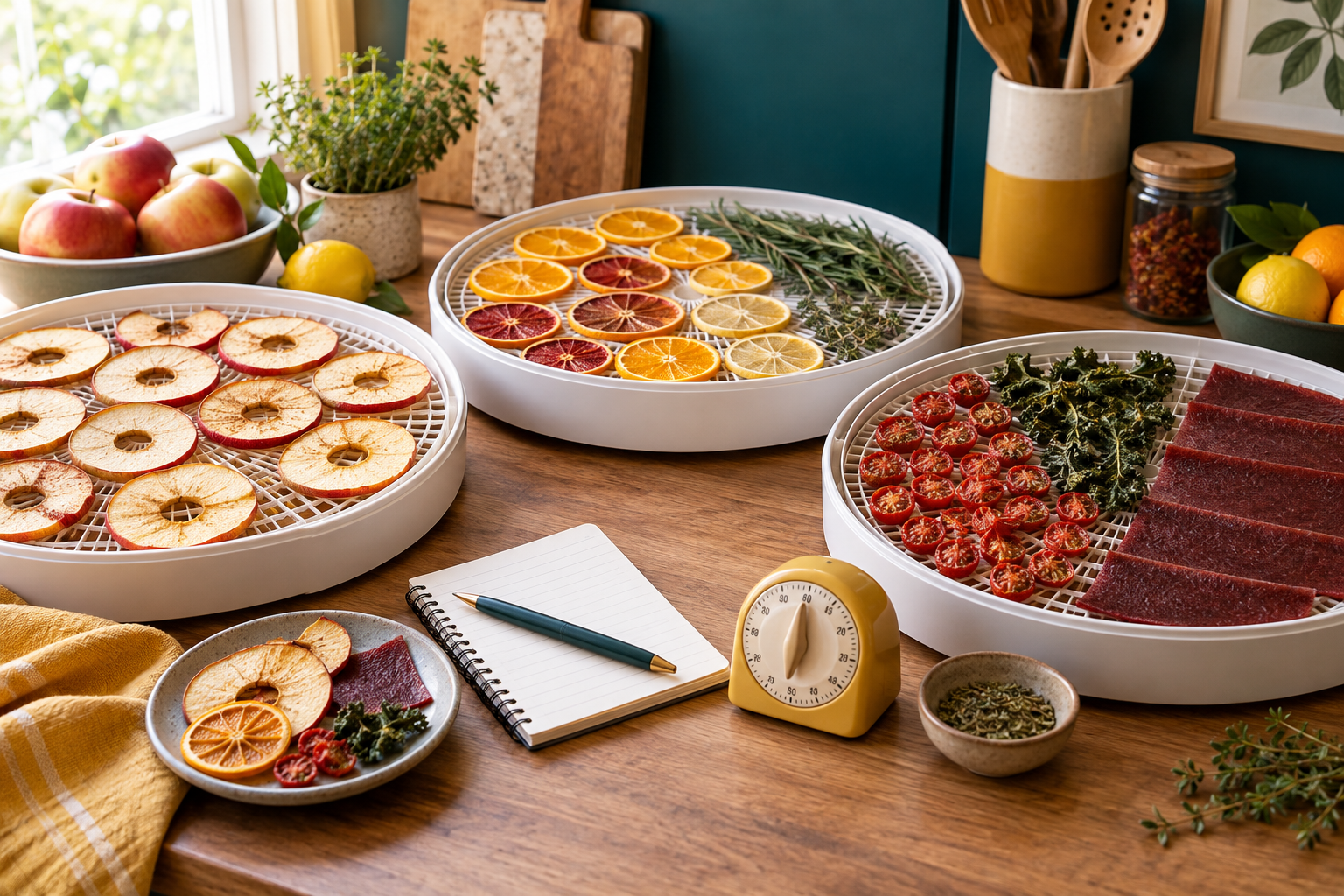
Dehydrator trays with apple rings, citrus, herbs, tomatoes, and fruit leather

Start a better batch

Research-led answers to the questions home dryers are asking now.

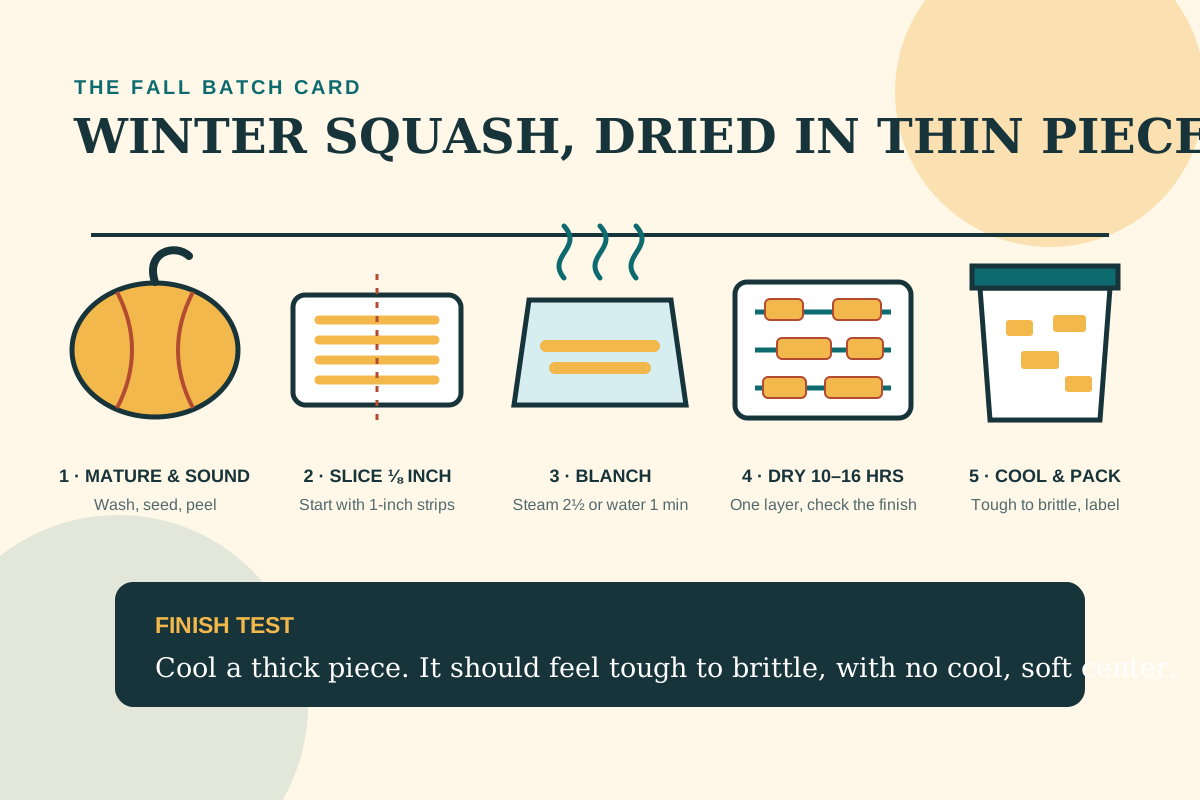
Winter squash batch card showing thin slicing, blanching, dehydrator trays, and a labeled jar
Fall vegetables

Dehydrate winter squash without guessing at the center

Cut uniform ⅛-inch pieces, blanch, dry to a tough-to-brittle finish, and record a repeatable soup-ready batch.

Open the squash guide →
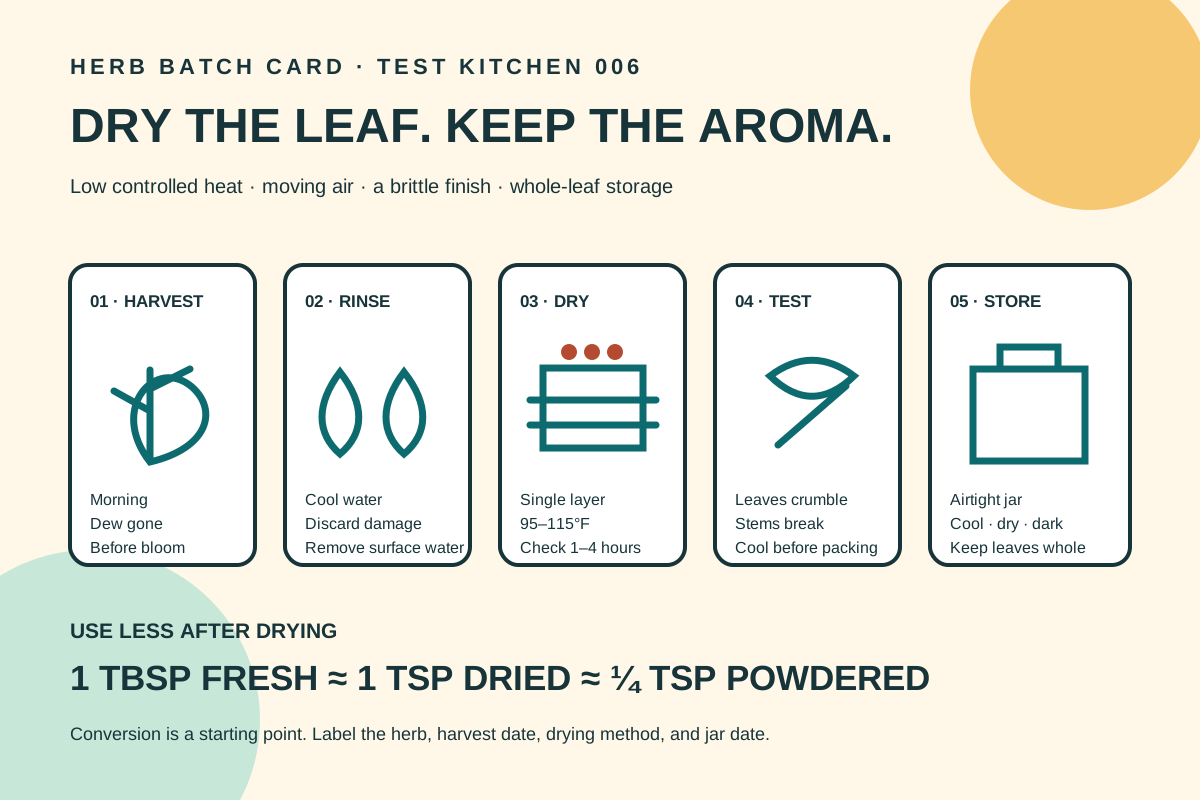
Herb drying batch card with harvest, rinsing, low-temperature trays, crumble testing, and storage
End-of-season herbs

Dehydrate herbs without cooking away the flavor

Use low controlled heat, test leaves and stems, store the harvest whole, and grind only a small working jar.

Open the herb guide →
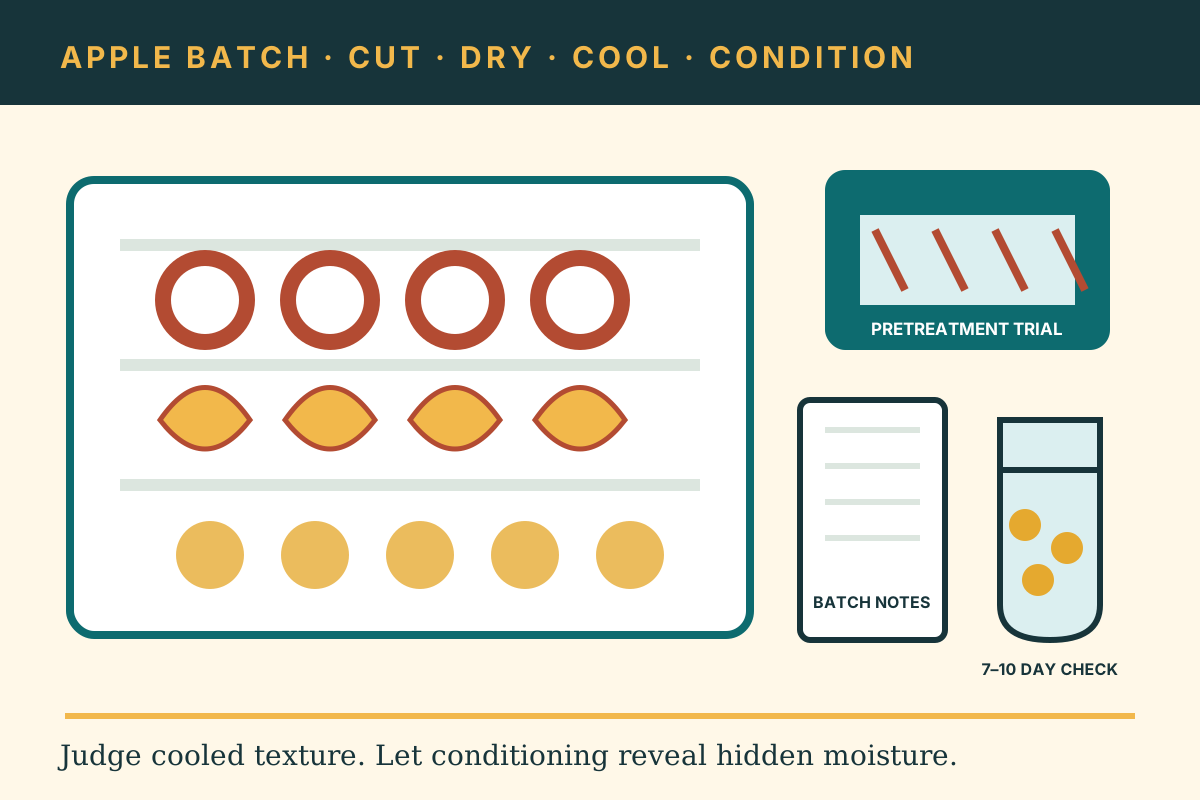
Apple rings and wedges on dehydrator trays beside a pretreatment bowl and conditioning jar
Fall fruit

Dehydrate apples without chasing a mythical crunch

Choose slices or leather, compare color treatments, test cooled texture, and condition the batch before storage.

Open the guide →
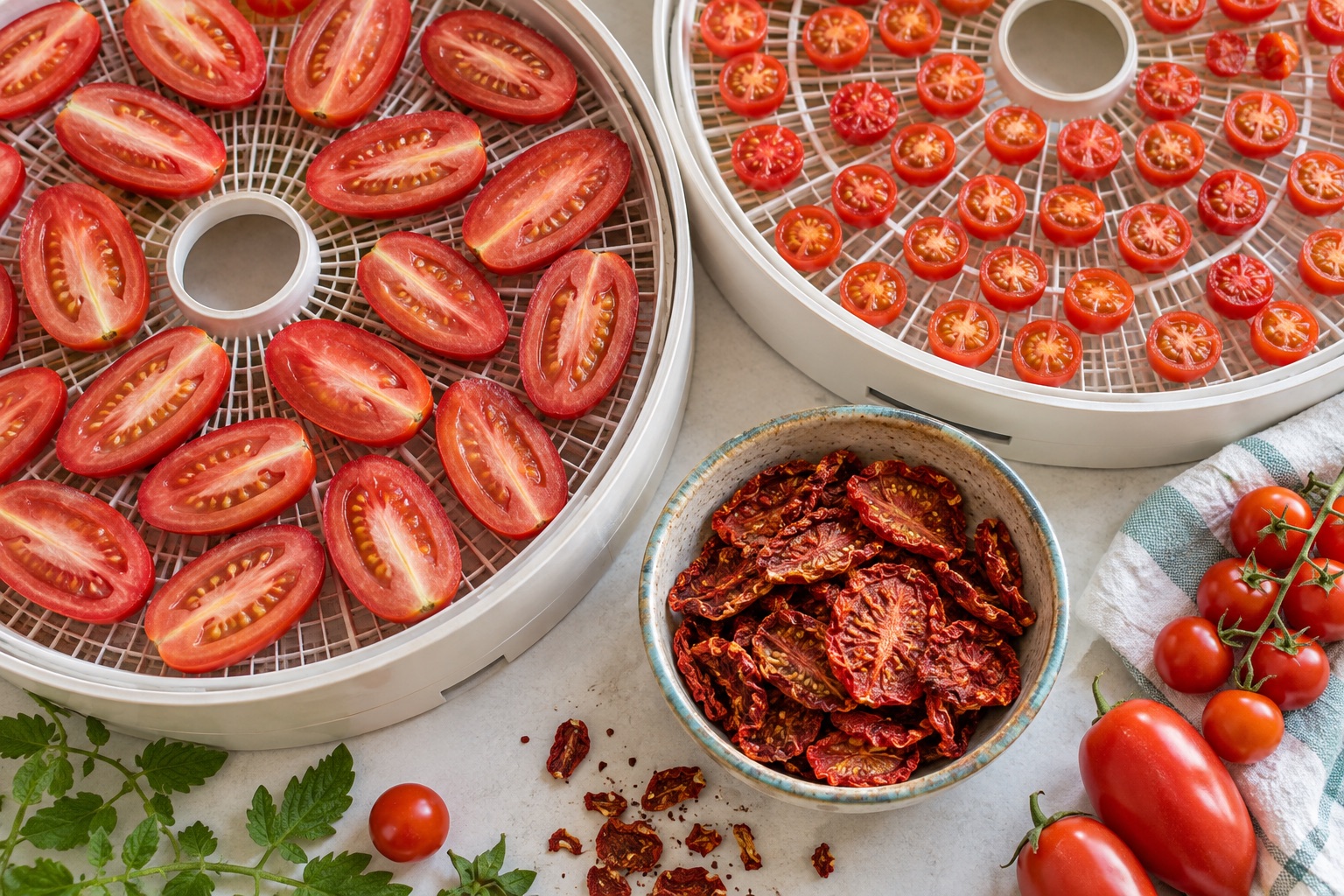
Roma and cherry tomatoes arranged on dehydrator trays beside dried tomato slices
Seasonal batch

Dehydrate tomatoes without guessing at the finish

Plan the cut, judge the texture, and package slices, flakes, or powder with fewer surprises.

Open the guide →
Apple rings and other foods arranged on dehydrator trays
Food safety

Safer homemade jerky starts before drying

Why the heat step matters and what USDA guidance says about meat and poultry.

Open the guide →
Dried fruit prepared for conditioning and storage
Storage

Condition dried fruit before it goes to the pantry

A simple post-drying step that helps reveal hidden moisture.

Open the guide →
Mixed dried foods beside a food dehydrator
Equipment

Dehydrator vs. freeze dryer: different jobs

Understand the process, cost, texture, and storage differences before buying.

Open the guide →

Four rules for every batch

Drying time is a range. Food thickness, humidity, load size, airflow, and the machine itself all change the finish.

Slice evenlySimilar pieces dry at a similar rate.
Test the foodTexture and moisture matter more than the clock.
Cool before packingWarm food can create condensation inside the container.
Match the methodHerbs, fruit, vegetables, and jerky need different preparation, temperatures, and finish tests.

Free email updates

Drying Bench Notes

Seasonal dehydration guides, batch checks, safe handling, conditioning, storage, and practical comparisons.

We use your address only for this site's newsletter. Read the newsletter privacy notice.